Sunday, April 5, 2026

Unlock a Calmer Mind: The Blueprint is in Your DNA


Two years ago, I had a client who was diagnosed with Bipolar Disorder. She found it challenging to comply with medications that were prescribed by her psychiatrist; stating that she suffers from side effects of the medications including feeling emotionally numb. Being a practitioner that uses the bio psycho social approach, I was determined to help her overcome this challenge. I talked to her at length about taking Pharmacogenomics (PGx) DNA test. The report she received helped guide her psychiatrist to the best option medication for her. The rest is history.

That was when I started working actively in collaborating with several DNA labs. All in the name of protecting my clients from all forms of harm!

Many have and are still facing the same challenges as the case above. And after a while, they will feel hopeless and think nothing works for them. Most of what is prescribed by doctors are based on past patient’s feedbacks. And many often think that DNA tests are only about ancestry or screening for fatal illnesses. The truth is whether it’s finding the right medication or the perfect supplement, your body already has the answers. Personalised Mental Health DNA Screening goes beyond general advice. It looks deep into your genetic makeup to provide a roadmap tailored exclusively to you.

What’s Inside Your Report?

Pharmacogenomics (PGx):

Guessing with prescriptions stops here. Analysis of how your genes metabolise antidepressants, anti-anxiety medications, and mood stabilisers. Find the medication that works for you - at the right dose - while minimising side effects.

Nutrient DNA Insight:

Your brain needs specific fuel. The DNA test screens for genetic markers that affect how you absorb B vitamins, Vitamin D, Omega-3s and Magnesium - all critical players in mood regulation and focus.

Specialised Counseling:

Data is only powerful if you know how to use it. I have been trained to sit down with you to translate your results into a clear actionable plan for your lifestyle and wellbeing. 

When you choose DNA-Informed Care, you get:

1. Faster Results: Skip months of medication adjustments.

2. Precision Wellness: targeted nutrient support for your unique deficiencies.

3. Empowerment: Understand why your body reacts the way it does.


Stop guessing. Start knowing.

Book your DNA test screening today by contacting Ms Johana at +60189136688

Wednesday, November 25, 2020

"I'm NOT Ok": The Importance of Mental Health Checkups


Its common for people to go for physical checkups where they are put to a few types of stress tests to see how healthy they are physically. Its also common for them to go for medical checkups where blood is drawn to see how healthy their internal organs are functioning. However, very rarely do we hear of someone going for mental health checkups. Why is that?

We often associate mental health with counselling or mental illness. And despite us living in 2020s, there still exists a sense of suspiciousness surrounding this aspect of our lives. This may be due to the fact that the brain is still seen as something of a huge mystery. I mean, even the psychiatrists who treat mental illness does not manhandle the brain unlike other specialists. Dentists examine teeth through direct contact. Same goes for heart surgeons, ENT and orthopaedics, to name a few.

Its a given that many suffer from trust issues and this may be due to many factors. Its all the more daunting to choose a counsellor who you would deem worthy enough for your trust just so you are able to work on issues and challenges which are very close to your heart. But what if you are not ready to trust someone with the skeletons in your closet and yet you are worrying about your mental wellbeing? 

Counselling is an hour long for each session and it involves you discussing difficult topics that are troubling you and your loved ones. However, mental health checkups is just 30 minutes in length and theres no need for you to trust the mental health service provider. Its no different from you going to a general practitioner doctor in your residential area when you are feeling sickly.

According to the WHO, mental health is a state wherein a person understands their potential and has the ability to deal with regular stressors in life. Additionally, the person who has the ability to work in a productive manner and can make a meaningful contribution to his community.

So, if you are wondering why is mental health important, you now know that you need to be mentally healthy to achieve your potential and be productive in the society you live and work in. Without sound mental health, you will find it extra challenging to cope with daily life stresses and this will ultimately affect your ability to remain productive.

If you display any of these five signs, its time for you to seriously consider coming in for a mental health checkup:

Grumpiness: 
If you notice that from a pleasant and happy person, you have turned into snarky person who gets angry over the smallest of things, it is a sign of emotional or mental chaos.

Sleeplessness:
Most people do not get adequate sleep because of demanding work and lifestyle. If you find you are unable to sleep at night, get a doctor to make sure its not a medical condition. If it isn't, then do submit yourself to a mental health checkup where you may figure out the reasons for your sleep disorder.

Avoiding People:
One of the first signs of depression is shunning people. You stop interacting with people and avoid physical and digital contact with them.

Binge Eating:
Long-term stress causes an increase in a hormone called cortisol and this affects your appetite, causing you to eat more. This means you will be craving for high fat and high sugar food which is associated with emotional eating.

Inability to Relax:
Are you always wound up and have a constantly active mind? This is a sign of anxiety, which is often overlooked because it is constantly present. You can live with anxiety for years without realising you are having a mental issue.

Mental health issues can wreak havoc with your life and turn it upside down. Don't let this happen. Instead, get an annual mental checkup done to catch any problem early, before it blows up and turns serious.

Contact MY Confidential at +60172979158 to book an appointment.


Monday, September 14, 2020

Happy Hormones: Food for Thought

Mental states are seldom just a matter of biochemistry, but it's fair to say that a shortage of serotonin can aggravate depression. A shortage of melatonin aggravates sleep problems. But did you know that the shortage of serotonin is what caused the shortage of melatonin, or that this connection explains why so many people who have depression can't sleep? The brain (and the intestines) make serotonin from the amino acid tryptophan, with the help of vitamin B6, creating a chemical known as 5-hydroxytryptophan (5-HTP) as an intermediate step. 

What is Melatonin? 
First identified in 1958, this naturally occurring hormone is manufactured by the pineal gland, a pea-size organ deep within the brain. All humans and most animals secrete melatonin throughout their lives, with the highest levels occurring during childhood. As we age, however, the production of melatonin declines, leading some researchers to theorise that melatonin supplementation might benefit all older people. Interestingly, natural melatonin levels vary widely. about 1% of the population have very low levels, and another 1% have levels 500 times above normal. There's no correlation, however, between these amounts and specific health concerns or sleep patterns. What it does. One of the main functions of melatonin is to regulate cycles of sleep and wakefulness. it does so by helping to set the brain's internal clock, creating what are known as circadian rhythms - the body's daily biorhythms that govern everything from sleeping and waking times to digestive functions and the release of a variety of hormones linked to reproduction and other body processes. In order to produce melatonin, the body responds to light cues, making more when it's dark outside (production begins each evening around dusk and peaks between 2 am and 4 am)and less during the day. this daily cyclical melatonin secretion is what tells the body when to sleep and when to awaken. What is the relationship between serotonin and melatonin? The brain (as well as the retinas, bone marrow, and certain white blood cells) make melatonin from serotonin. Melatonin is also a powerful antioxidant that can slow the progression of Parkinson's disease and ovarian cancer, but once it has quenched a free radical reaction to protect a cell, it is used up, and cannot be recharged. Once serotonin has been transformed into melatonin, there is no further serotonin and melatonin reaction, since there are no serotonin vs melatonin reactions and melatonin is not turned back into serotonin. There are many supplements, such as 5-HTP, that can help your brain make serotonin. 

What is 5-HTP? 
The nutrient 5-HTP, short for 5-hydroxytryptophan, is a derivative of the amino acid, which is found in such high-protein foods as beef, chicken, fish, and dairy products. The body makes 5-HTP from the tryptophan present in our diets. It's also in the seeds of an African plant called Griffonia simplicifolia which is the source of the 5-HTP supplements sold in health-food stores. 

The focus of much recent interest, 5-HTP acts on the brain, helping to elevate mood, promote sleep and weight loss, and relieve migraines, among other uses. Unlike many other supplements, (and drugs) that contain substances with molecules too large to pass from the blood stream into the brain, 5-HTP is small enough to enter the brain. Once there, it is converted into a vital nervous system chemical, or neurotransmitter, called serotonin. Although it affects many parts of the body, serotonin's most important actions take place in the brain, where it influences everything from mood to appetite to sleep.


But if you taking a supplement or a medication for depression, do you also need to take melatonin? 
It all depends on whether or not you have trouble sleeping. If you are already on a selective serotonin reuptake inhibitor (SSRI), ask your doctor if you might not be treated with a drug called agomelatine, which is sold under the trade names Melitor, Thymanax, and Valdoxan. This drug is not a reuptake inhibitor, but it keeps the brain from recycling 5-HTP, keeping serotonin levels higher, while it also helps the brain make more melatonin. Especially if you have obsessive-compulsive disorder with moderate to severe depression, this medication may be better for you than any supplement. Only your doctor will know for sure. 

Deep Sleep 
If you don't need this medication, then you might consider adding melatonin to your supplement program. The thing to remember about melatonin is that it induces sleep-so you want to take it at bedtime, not when you need to be waking up to go to work! Also, start with a smaller dose. Melatonin is non-toxic even in large doses, but you should only take enough to get to sleep. This is usually 1 to 3 mg, taken 1 hour before the desired bedtime. It also helps to sleep in the dark, so your brain can make its own melatonin. The slightest exposure to blue light, even if your eyelids are closed, interrupts the brain's production of melatonin. 


Montmorency tart cherries

Only one food delivers melatonin in a dosage that makes a difference to your health; Montmorency tart cherries. If you like cherries, eat them every day. You may find that they help both depression and insomnia. (More about anxiety and insomnia). 

Friday, January 31, 2020

Hard Truth On Being A Private Practitioner


"Theory is a major element in professional knowledge. Doubts about its value reported by practitioners raise questions at a critical juncture in the careers field about the relevance of prevailing theories and how they are approached. The topic of the relationship between theory and practice is a sensitive one in the debate on competencies and an illuminating one in that on post-modernism. As recent studies demonstrate, problems in integrating theory and practice arise in training and may persist, but experienced practitioners achieve ‘fusion’ between them and become ‘practical theorists’. Practice is improvisatory, and is refined by frameworks provided by theory, critical thinking and ‘reflective practice’. However, theories are often tardy or irrelevant, and practitioners also need to be able to carry out their own research, including action research. This has implications for initial and in-service training, supervision and policy, and for the relationships between researchers, theorists and practitioners." (Audrey Collin (1996) Re-thinking the relationship between theory and practice: Practitioners as map-readers, map-makers—or jazz players?, British Journal of Guidance & Counselling, 24:1, 67-81, DOI: 10.1080/03069889608253709)

Let's get something straight. A registered and licensed counselor in Malaysia has several job options: organizations, education and private practice. Counselors who work in organizations as career counselors earn a monthly income, regardless of how many counseling sessions they clock in a month. Counselors in educational settings would also be receiving monthly salary where the hours spent on counseling is further added with roles of being a substitute teacher. Some might even pursue their doctorate degree that would make them attractive to higher education universities and colleges. They also earn a monthly income which allows them the privilege of providing pro bono counseling as to ensure they do not lose the skills they have acquired through their trainings during practicum and internship. The same cannot be said of those who chose to be their own bosses by taking the huge leap into setting up a private practice.

Many therapists have dreams of one day starting their own private practice. Following through on these aspirations, however, requires taking a number of things into consideration.
There are definite pros and cons. Having worked as a therapist for a number of community organizations prior to having my own private practice, I can attest to the validity of both. Some of the issues to consider include:

BUSINESS CONCERNS

Starting a private practice requires exploring the laws in your city that apply to owning your own business. You will typically need to obtain a business license from the city you live in and renew it on a yearly basis.

WORK SCHEDULE

Owning your own business means having the freedom to limit the number of days and hours worked. However, you also need to be able to accommodate people when they are available to come in, which may require having to work evenings and/or weekends.

MARKETING

Being in private practice requires taking the steps necessary to generate business, which many therapists feel uncomfortable doing. Establishing a web presence is important in order to attract individuals looking for the specific services you offer, the therapeutic approach you use, and any areas of expertise you may have. Effective ways of advertising include creating a practice website, writing a blog, and maintaining one or more professional profiles on online therapist directories such as GoodTherapy.org. All of these efforts take time and some financial investment.

EXPENSES

Going into private practice requires taking into consideration the overhead and other expenses that apply when one owns a business. Some of the expenses to account for include the need to lease office space; the cost of utilities; furnishing the space; marketing efforts; obtaining office supplies and business cards; and the price of medical, dental, and liability insurance. You will also need to decide whether to do your billing yourself, which can be time-consuming, or hire someone to do it for you. If you are just starting out, you may want to consider subletting an office on a part-time basis (for example, on weekends and/or one or two evenings a week) to start building your practice before quitting your full-time job.

FLUCTUATING INCOME

Although a private practice can be profitable, it can also be unpredictable at times. Whereas you are typically guaranteed a certain monthly income when working for an agency or organization, a private practice does not provide the same level of security. The number of individuals seen, as well as the income generated, tends to vary from month to month. It can also take time to build up sufficient business for you to live off of, and you have to set aside money for taxes and/or make quarterly estimated tax payments, as this will not be done for you. You also need to keep in mind you will not get paid for any time off, so you will need to have a cushion set aside in order to account for any vacation or sick time.
Going into private practice can be profitable and rewarding, but it can take a lot of time and energy before you get to that point. The risks associated with any type of business are not for everyone, but the dream of starting your own private practice can become a reality if you are willing to take a leap of faith and put in the work needed in order to succeed.
Source: Good Therapy.
Which brings me to the current pebble in my shoe. People who only know how to teach. They have never been self-employed. They have never been without a boss to make decisions for them. They have never not have a fixed monthly income. They sit on their cushy asses, their noses buried in textbooks they read and vomit to their students. They know theories by hard and accumulate knowledge and yet have no spare time whatsoever to practice the so-called knowledge they had learned. And yet, they have all the time in the world to question the credibility of others who have guts to take risks. They believe that just because they are the academicians, they are the only ones who are ethical. They question other people's decision making styles. Their worldview is confined to the four walls of their classes that it is rendered unrealistic in so many hilarious levels!

The hard truth is private practice can never guarantee you a stable monthly income. There is no EPF or SOCSO unless you are willing to invest in yourself on your own. Without trust, no amount of therapy can ever be effective on the client. However, we can be grateful for technology that we have now that didn't exist when I was first setting out. And I am eternally grateful to western content on the media for making mental health more palatable to the general local public.

So, why choose private practice? Because somehow, when we connect with our clients and see them live up to their fullest potential, something inside us hear words of affirmation: "You did good!" What we do matter to our clients. And that is reason enough.


About MY Confidential

MY Confidential (Association of Private Counselors) was established as an NGO on February 22nd, 2019. We provide private counselling services to the general public as well as service office counselling rooms for licensed practitioners at reasonable fees.

Our humanitarian mission is to provide psychological support to our first responders and rescuers in crises settings. We aim to have our members and volunteers to be trained as caregivers as well as being a support system to those whose jobs are to save lives.

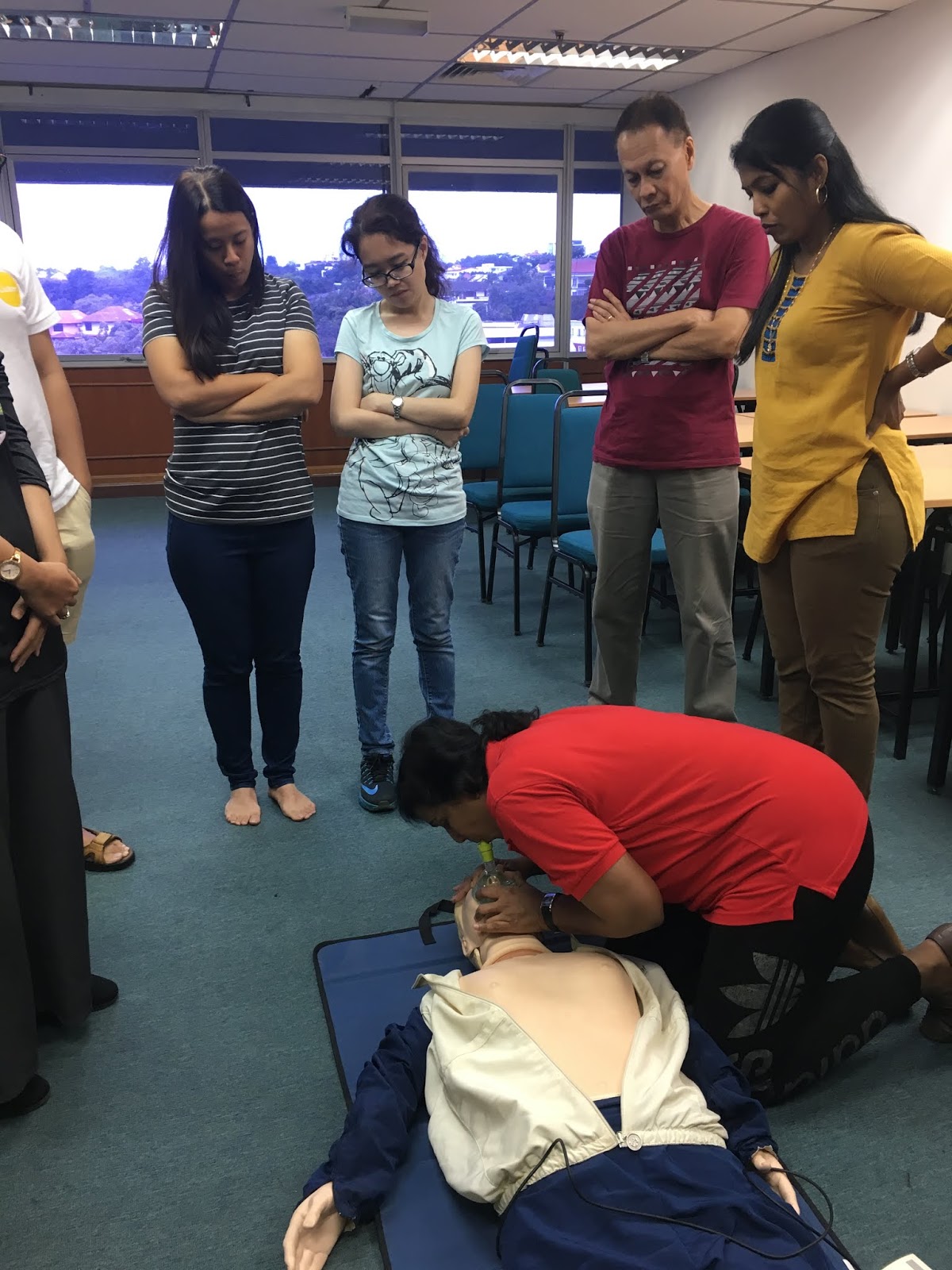
Our members consist of registered and licensed counselors in private practice, counseling interns, counseling students, and those who are trained in Crisis Intervention, First Aid and CPR. Our members have attended extensive Air Emergency Exercises organized by Malaysia Airports.

Thursday, January 30, 2020

A Note From Founder


“We’re here to put a dent in the universe. Otherwise why else even be here?”
—Steve Jobs
This quote continuously inspires me. And the very reason I first started out being a pioneer in private practice in Malaysia. Back when the only places anyone can get any counselling services were either in churches or religious governmental department, I saw the gaping void in the need for regular individuals could go to for therapy with the confidence in privacy and confidentiality. The very core to the effectiveness of counselling is none other than TRUST. And with the stigma surrounding mental illness, many were too afraid to even admit they needed help, what more to be seen walking into a public counselling centre. 
Having witnessed how publicly ugly my parents's divorce was back in 1978, I wished there was somewhere they could've gone for some form of help for their marital challenges that was also private and confidential. This spurred me to venture into private practice, although the income was very unstable, at best. Needless to say that I wouldn't have been able to do this without the rock solid support from my husband and the understanding from my daughters.
The challenges that came with the private practice were countless. Aside from the general public phobia of being seen as 'crazy' by their loved ones, finding a private location for an office that was also affordable based on unstable income seemed humungous. 
Fast forward two decades and now I have successfully taught and trained an excellent team of counsellors who have joined me in MY Confidential. I have also established a centre that provides licensed counsellors a place for them to see their clients with flexible hours and very reasonable room rates. All this is a part of the cause that I have been championing: to encourage more and more counsellors to venture into private practice without having to cough out a huge amount of investment to set up an office.
Apart from the private practice, MY Confidential members get to volunteer on crisis missions. Our current focus is on the rescuers and first responders of SMART Malaysia. My personal mission is to have MY Confidential as an NGO that is self-funded by the use of the counselling centre.
My promise to the general public is making your privacy our priority.
My promise to licensed counselors who choose to join us is the affordable room rate for a professional and private setting.
Finally, my promise to Malaysia: MY Confidential is making a dent in the universe; one person at a time. 
Welcome to MY Confidential!
Sincerely,
Johana Dato' Johari

Saturday, March 16, 2019

Membership Application Form for MY Confidential


Since the previous post, many individuals have shown enthusiastic interest in joining our noble cause. Anyone who wishes to do so, may download the pdf membership registration form. After filling up the form, you may proceed to submitting them via email at info.myconfidential@gmail.com or personally drop in at our office at 8B Jalan Wan Kadir, Taman Tun Dr. Ismail. The pdf downloadable is below:

MY Confidential Membership Application Form

You may also contact us directly by the widget and the bottom of the right side of this page.

Do share this with those whom you believe would be interested in joining our team. We look forward to hearing from you.

Cheers and Peace!

Wednesday, March 13, 2019

Association of Private Counselors (MY Confidential)


In March 2014, Malaysia's MH370 went missing. And that was when I received my true calling. Doctors tend to be at their best when their patients are at their worst. Same goes for counselors. The irony of the pinnacle of my career happening at Malaysia's worst. Malaysia was unprepared for this. Caregivers were not trained for a commercial carrier to vanish into thin air.


MH370. Everly Hotel Emergency Operations Center. 2014.

A few months later, MH17 was shot down. Still reeling with dwindling hope of ever finding our missing aeroplane, I volunteered my time and expertise again. Again, I was at my best. Although caregivers had some experience in dealing with MH370's next of kins, most of the passengers were foreigners and therefore the green zone was in all the countries affected by the event.

These two extraordinary mishaps had shaped and formed me as a counselor. I saw what was lacking and what needed to get done. And I was no longer the same. That is what is often said for those who had survived a storm.

Fast forward to 2019. In the past 5 years, I had expanded my expertise from mere counseling to teaching and to training. Teaching future counselors. Training them to be caregivers. Caregivers. Often, this term is associated with palliative care. But without caregivers, the next of kins of both airplanes would have not had anyone to tend to their sorrow and grief. The caregivers provided support to those who needed them most.

Apart from the caregivers, the first responders such as rescuers were also the unsung heroes. The public only complained and criticised about shortcomings of any missions but little do they realize how important the rescuers are to our wellbeing as a whole. Hence, I begun my most important mission of all: to give care and support to the rescuers.

More often than not, they return from traumatizing missions with no one to tend to their PTSD. Many scored very highly on the PTSD Checklist. Yet, they remain silent for fear of losing their jobs. While the mental health of our common people should be prioritized, we should also have someone championing the mental health of our first responders and rescuers.

MY Confidential (Association of Private Counselors) was established as an NGO on February 22nd, 2019. Our mission is to provide psychological support to our frontliners. We aim to have our members and volunteers to be trained as caregivers as well as being a support system to those whose jobs are to save lives.

Our members consist of registered and licensed counselors in private practice, counseling interns, counseling students, and those who are trained in Crisis Intervention, First Aid and CPR. Our members have attended extensive Air Emergency Exercises organized by Malaysia Airports.


AEREX. KLIA. 2018


AEREX. KLIA. 2018


Members learning First Aid and CPR

We welcome all registered and licensed private counselors to join our squad. We welcome volunteers who are creative in raising funds for our cause. We welcome financial support and funding from individuals and corporations who share our vision for making mental health affordable to everyone. 

For further details, do contact our President Ms Johana Dato' Johari at 018-9136688 or email at johana.myconfidential@gmail.com

Join us in our noble humanitarian mission and may we all be blessed with purposeful lives. Ameen.

Monday, February 25, 2019

Why us?


Why choose MY Confidential for counseling? Because we assure affordable fees by keeping our monthly overheads to a bare minimum while providing an environment that is not only emotionally safe for clients to open up but also that our location is in a safe neighbourhood. We abide by the fee structure gazetted by law and there are no hidden charges. See below.


We don’t believe in paying more than half a million ringgit for billboard advertising. We keep it simple. We keep it affordable. We keep it practical. Because human lives take priority over money. That’s us. That’s MY Confidential. 
Contact us to see if you are eligible for minimum fee counseling. 

Counseling Hotline: 018-9136688
Counseling Clinic: 03-74944101

Wednesday, January 9, 2019

Opening Soon: A New Clinic!


We are excited to announce the upcoming opening of our clinic in Taman Tun Dr. Ismail, Kuala Lumpur. Therefore, we will only resume sessions with clients by early February. Keep your eyes on this site for more updates.


Friday, May 29, 2015

The Best Apology - How To Say Sorry Like You Mean It

Forgiveness is an essential part of a growing relationship. Without a consistent practice of forgiveness, relationships are repressed. Forgiveness is not something that comes naturally to most of us, certainly not to me, but it can be learned.

Forgiveness Doesn’t Always Involve Reconciliation

Forgiveness doesn’t always involve reconciliation. The sad reality is that sometimes forgiveness may need to happen for the offended party to move on and begin to heal, but restoring a relationship with the offender would actually be an unhealthy and unwise thing to do. For instance, I do not have a relationship with the man who sexually abused me as a child. For my own sake, I do work on forgiveness over that situation regularly. I don’t need to have contact with him or work through anything with him. He is an unsafe person and pursuing any kind of reconciliation would be toxic to my life. I share that extreme example because forgiveness is such a tough and confusing topic for those of us who have experienced this kind of deep betrayal.
For now, as we talk about forgiveness, let’s agree that we are talking about forgiveness in the context of relationships we value and want to continue, like our marriages. If we want our marriages to last, forgiveness must be learned and practiced over and over again.

Apologize. Forgive. Repeat.

The act of forgiveness is just one side of the equation. For Tony and I, there is a regular rhythm of forgiving and apologizing. Sometimes it’s a quick tapping on the snare drum… apologize, forgive, apologize, forgive, apologize, forgive. Sometimes there is a longer wait and a few extra beats in between… Stand off. Eye contact. Apologize. Stew. Avoid. Forgive. The goal is always to get to apologizing and forgiving at some point, even if there are motions that happen in between. It’s our rhythm, it’s not perfect, but we keep working on it.
Last week we focused on the forgiveness side of our rhythm. We shared with you that a relationship cannot last without a consistent practice of forgiveness. A good apology is a pretty essential factor in each of us coming to a point of sincere forgiveness. I used to believe that forgiveness was essential regardless of an apology. In some cases, I still believe it, but I have since learned that if a relationship is going to grow, both are truly necessary.
The Best Apology - How to say sorry like you mean it #staymarriedI can forgive someone who has not apologized, but our relationship will be stunted. Trust has been broken and it’s not going to be repaired without the other person acknowledging I was hurt. So it is in the case of my relationship with the man who abused me. I have and continue to forgive him through counselingand my own healing process, but he has not and will not apologize. Our relationship is absolutely not going to grow. We are completely separated and I am the better for it. Again, an extreme example so that we can get to the relationship we really want to talk about, our marriage relationships, and the way we dowant it to grow.
In our marriages, apologies are just as necessary as forgiveness. An apology is usually the turning point in a fight. It’s the point at which you go from heated anger and growing resentment to consider how to grow past an offense. Sometimes apologies can be weak and actually make the situation worse. But, just like we can learn to be better forgivers, we can also learn to apologize in the way our spouse will best receive it.

What Kind of Apology Do You Need?

Tony and I often talk about understanding each other’s Love Language. Since discovering them, through Gary Chapman’s research and book, we have found them incredibly valuable in relating to and understanding each other. It turns out that Gary Chapman and co-author and researcher Jennifer Thomas have also discovered there are five distinct ways that people express and prefer to receive apologies. They go into great detail and wonderful examples in their book When Sorry Isn’t Enough, so it’s definitely worth the read. In the mean time, take a look at this list and consider which of these types of apologies you are most likely to make and which you prefer to hear from someone who hurts you…

The Five Languages of Apology

Expressing Regret
Accepting Responsibility
Making Restitution
Genuinely Repenting
Requesting Forgiveness
If you’d like to discover your personal Apology Language Profile, you can take their free assessment here. It takes about 15 minutes, so give yourself some time, preferably when you are relaxed and try not to rush through it. Hint: You can click the Start button even if you don’t enter your name and email if you’d like to get started right away.
We believe that all five are so important, so we have our own way of thinking about apologizing that, as it turns out, incorporates them all. It’s a short list of dos and don’ts that we’ve named “The Best Apology.” Now, if you’re like me, you won’t find yourself wrong very often… or you won’t realize that you were wrong very often… so you might want to Pin this image so you can refer back to it on the rare occasion that you do need to apologize.

Talk these through with your spouse. Take a look at each point and decide together how you would feel if your partner apologized to you using these dos and don’ts. Take some time to take the Apology Language Profile and share your results with one another. It could be that the apologies you’ve been making haven’t been received because they are in the wrong apology language. Arguing and fighting are natural and necessary parts of marriage and we aren’t going to always be able to avoid them. So, it’s essential that we get really good at apologizing, forgiving, and committing to #staymarried.

Original Source: http://staymarriedblog.com/the-best-apology-how-to-say-sorry-like-you-mean-it/

Sunday, April 5, 2015

6 Steps to Help Heal Your Inner Child


According to John Bradshaw, author of Home Coming: Reclaiming and Championing Your Inner Child,the process of healing your wounded inner child is one of grief, and it involves these six steps (paraphrased from Bradshaw):

1. Trust

For your wounded inner child to come out of hiding, he must be able to trust that you will be there for him. Your inner child also needs a supportive, non-shaming ally to validate his abandonment, neglect, abuse, and enmeshment. Those are the first essential elements in original pain work.

2. Validation

If you’re still inclined to minimize and/or rationalize the ways in which you were shamed, ignored, or used to nurture your parents, you need now to accept the fact that these things truly wounded your soul. Your parents weren’t bad, they were just wounded kids themselves.

3. Shock & Anger

If this is all shocking to you, that’s great, because shock is the beginning of grief.
It’s okay to be angry, even if what was done to you was unintentional. In fact, you have to be angry if you want to heal your wounded inner child. I don’t mean you need to scream and holler (although you might). It’s just okay to be mad about a dirty deal.
I know [my parents] did the best that two wounded adult children could do. But I’m also aware that I was deeply wounded spiritually and that it’s had life-damaging consequences for me. What that means is that I hold us all responsible to stop what we’re doing to ourselves and to others. I will not tolerate the outright dysfunction and abuse that dominated my family system.

4. Sadness

After anger comes hurt and sadness. If we were victimized, we must grieve that betrayal. We must also grieve what might’ve been–our dreams and aspirations. We must grieve our unfulfilled developmental needs.

5. Remorse

When we grieve for someone who’s died, remorse is sometimes more relevant; for instance, perhaps we wish we’d spent more time with the deceased person. But in grieving childhood abandonment, you must help your wounded inner child see that there was nothing he could’ve done differently. His pain is about what happened to him; it’s about him

6. Loneliness

The deepest core feelings of grief are toxic shame and loneliness. We were shamed by [our parents] abandoning us. We feel we are bad, as if we’re contaminated, and that shame leads to loneliness. Since our inner child feels flawed and defective, he has to cover up his true self with his adapted, false self. He then comes to identify himself by his false self. His true self remains alone and isolated.
Staying with this last layer of painful feelings is the hardest part of the grief process. “The only way out is through,” we say in therapy. It’s hard to stay at that level of shame and loneliness; but as we embrace these feelings, we come out the other side. We encounter the self that’s been in hiding. You see, because we hid it from others, we hid it from ourselves. In embracing our shame and loneliness, we begin to touch our truest self.

Associate Editor
Source: http://psychcentral.com/blog/archives/2012/09/23/6-steps-to-help-heal-your-inner-child/

Tuesday, March 3, 2015

Choosing to Love Myself

"The 1998 book, Choice Theory: A New Psychology of Personal Freedom, is the primary text for all that is taught by The William Glasser Institute. Choice theory states that:

  • all we do is behave,
  • that almost all behavior is chosen, and
  • that we are driven by our genes to satisfy five basic needs: survival, love and belonging, power, freedom and fun.

In practice, the most important need is love and belonging, as closeness and connectedness with the people we care about is a requisite for satisfying all of the needs."


Today, I've decided to focus on our need for love. We all need to love  and feel closely connected with those who are important to us and be loved by them in return. But lets ponder upon something: how many of us actually include ourselves as someone of equal importance in our own lives? How many of us include ourselves in our Quality Worlds? How many of us feel connected to our own inner selves?

The past few months have been emotionally challenging to me, to say the least. I found myself feeling unappreciated and invisible to those whom I considered worthy to exist in my Quality World. I felt disappointed when they didn't reciprocate the things I had gone out of my way to do in order for them feel happy and loved. And it was truly difficult for me to shift my perspective and look at what happened from other angles. I couldn't figure out why I kept allowing them to disappoint me when they have an excellent track record at letting me down repeatedly. I understand the concept that just because I have them in my Quality World, that does not guarantee that I will be in their's. If such is the case, I should be able to easily communicate my personal boundaries to them and tell them that what they were doing to me is not okay. I was able to do that with most of those in my Quality World. But why couldn't I do the same to the few that were hurting me and causing me a lot of emotional stress?

It was during my latest session with my therapist that I experienced a very powerful inner revelation: I loved those who were hurting me more than I love myself! Wow! That was a real huge wrecking ball to break my concrete hard mental blocks!

Think about it for a moment. Why don't we include ourselves in our own Quality Worlds? Why? Is it possible we suffer from self loathing? Is it possible that our inner bullies have judged us unworthy of being loved by others? When someone tells us they love us, how many of us battle the inner cynic that whispers "Yeah, sure!" It is easy for us to believe we are loved by our parents and siblings. But when it comes to others who are not related to us, we counter their expressions of love with disbelief. I seriously think this stems from lack of self love. And this is not healthy. At all. And lets take a look at the Seven Deadly Habits. How easy it is for us to criticize, blame, complain, nag, threaten, punish and bribe (often with junk food or impulsive spending) ourselves.

Imagine practicing the Seven Caring Habits onto ourselves for just a day. We can either choose to apply all Seven Caring Habits onto ourselves in a day (all 7 in 1 day, once a week), or choose one of the Seven Caring Habits onto ourselves for one whole week (1 Caring Habit a day, everyday, for 1 week). In fact, there's a variety of ways you can apply this idea onto yourself. The sky the limit as far as this is concerned!

Imagine how you would feel if you were to practice supporting your inner self all throughout a day; or even a week! Of course, you would still be getting support from people around you. But if you do not feel you are worthy of accepting any external support, no matter how supportive people are around you, you would still end up feeling alone and unsupported. The same goes with the rest of the caring habits such as encouraging, listening, accepting, trusting, respecting yourself and negotiating differences that exist between what lies within you and what you show the world.

Do you view yourself idealistically according to how you see yourself in your Quality World or are you able to accept yourself realistically as who you really are? Are you congruent with yourself? Does your inside match your outside? Are you able to be authentic and sincere with yourself? Chances are, if you feel exhausted and glad to be home within your comfort zone after a social outing because it does take a lot out of you to behave a certain way and suppress your true self, it is highly possible that you are afraid to be yourself. That is a sign of lack of self acceptance and lack of self worth.

What I am suggesting is that we practice the Seven Caring Habits onto ourselves FIRST before we even start doing the same onto others. A cliche quote comes to mind. "Charity begins at home." Here's mine: "If you don't love yourself, you don't know what love is."

Thursday, February 26, 2015

Mental Health and Happiness: Latest Video Discussion With Dr Ken Larsen.

Sharing my own personal struggles in maintaining mental health as well as my first hand experiences in an effective application of Choice Theory in my daily life. Click the link below to watch the video.

http://mentalhealthandhappiness.com/profiles_johana-johari/

Tuesday, February 24, 2015

Realistic Ideals and Idealistic Realities

Through his theory on Reality Therapy, Dr. William Glasser explains that most negative and/or abnormal behaviours are merely symptoms of unhappiness. This unhappiness stems from many of the basic needs not being met in one's life. In our ideal world, we have significant people in our lives, places and material things and last but not least, our values and belief system. When our ideal world does not match our reality, we will employ all kinds of negative behaviours as a way to control our reality just so that it will match our ideal world. This is called External Control Psychology. Parents scold their children for misbehaving. Teachers will threaten and punish when student don't do their homework. Both parents and teachers can vouch that external control psychology only works for a while. Pretty soon, its effectiveness will wane.

To cite an example of a character taken from a movie, Jack Nicholson's character in "As Good As It Gets" displays symptoms that can be diagnosed as Obsessive Compulsive Disorder. He chooses to behave this way, sticking religiously to rituals of latching his door three times, switching his lights on and off three times, and other eccentric looking practices, just so that he wouldn't have the time to dwell on the fact that he has noone to love and noone to love him. He is lonely. What is tragic about this character is that it is based on a real life person! The hassles of performing his rituals daily is nothing compared to the pain of his loneliness.

In my ideal world, my parents are still married to each other, loving each other and our family in perfect harmony. But in reality, my parents divorced when I was just 13 years old. Although they are no longer married to one another, my parents do get along very well. Looks like they are better off as friends rather than as spouses. In my ideal world, my brothers and their families get along famously with myself and my family. But in reality, a few years ago, my brothers and I have had a few clashes. I chose to try depressing, angering and crying. Mind you, none of these behaviours worked! But when I gave up trying to match my reality to my ideals, I felt it easier to accept things as the way they were. And to my surprise, things did work out eventually for all of us. Because I chose to stop trying to control the choices and behaviours of those I love and focused more on controlling my own behaviour and wishing things to be the way i wanted them to be.

This is an example of how we choose our behaviours and the choices we make all in the name of being idealistic. Mind you, there is nothing wrong with being idealistic and having ideals. But it is healthier for us to not behave in ways to control others to behave the way we want them to behave. We get angry with friends, family and children because we hope that our angering will be produce better behaviour from them. That means to be a controlling freak! I admit, for many years, I was just that - a controlling freak. But, thanks to knowledge of psychology and Choice Theory, I have learned that everyone likes to be in control of something or someone, but noone likes to be controlled!

I have learned to accept that although I may have some significant people in my ideal world, it is ok for me not to be in their ideal world. I have come across many people who are often depressed, angry, frustrated and hostile just because their ideals and reality don't quite match. And when they fail to control those they wish to control, the above feelings get magnified a million times. Some of their unhappiness may manifest itself in the form of physical pain that has no physiology to it, i.e; they've gone to their doctors for cures but no medication would work. Aches and pains that has no physiological reasons to them can be termed as fibromyalgia or psychosomatic pains. When they choose to think more positively, they will feel and behave better, and those mysterious aches and pains will magically disappear!

There are those who are close to my heart and mean the world to me who are showing symptoms of unhappiness. They relentlessly try to control those around them and when all else fails, they begin behaving in ways that drive even the most loyal and loving away from them. Sadly, they don't realise what they are doing to themselves. My fervent wish is to be given the opportunity by Allah to help them see themselves and their lives from a different angle.

So, next time when you are feeling angry, upset, frustrated or flabbergasted, ask yourself, "What is it that I really want? Am I hungry or in pain? Whose behaviour is it that I am trying so hard to control? Whose behaviour can I really control? Is this behaviour going to help me get what I want? Is there another behaviour that I can choose that would yield the results that I want?"

Next time a massive urge to control someone other than yourself rises to your throat that makes you wanna just shout in anger, my prescription to you is this: just grab the TV's remote control and switch channels. That way, you won't be chasing all those you love out of your life. And then, only then, will you have all those you love around you and you will feel loved. Below, I have listed out the Seven Deadly Habits that can ruin any relationship and Seven Caring Habits that can enhance and repair any relationship. Give it a go! What have you got to lose?

Seven Deadly Habits:
Criticising
Blaming
Complaining
Nagging
Threatening
Punishing
Bribing or rewarding to control

Seven Caring Habits:
Supporting
Encouraging
Listening
Accepting
Trusting
Respecting
Negotiating differences

"If I choose all that I do, maybe I can choose to do something better."

Wednesday, December 31, 2014

Change of Principle Contact Number

Please be informed that the principle contact number has been changed to +6018-9136688 effective from 1st January, 2015. Location of the office remains the same.

Thank you.

Sunday, November 9, 2014

Mental Health and Happiness Online Summit

Here is a recorded video interview between Dr Anasuya and me. Do take the time to watch. Maybe you will find something that you can learn to be happier.


Saturday, May 3, 2014

Mental Health Awareness Month 2014: Mind Your Health


In the past, mental illness has often been associated with the stigma of insanity or madness. The general public believed that people who suffer from anxiety, depression, OCD, schizophrenia and bipolar disorder should just 'snap out of it' because 'it's all in your head', and that positive thinking is enough to overcome such imagined maladies. After the recent advancement in brain imaging technology , scientists have been enabling psychiatrist to have better understanding of the brains and dysfunctions that may occur to the brain. Take a look at the brain images below and notice the difference between healthy brains and those riddled with illness.


In a 2013 BBC documentary entitled "The Truth About Depression," all known facts and beliefs about depression and other mental disorders in the past has now been proven to be inaccurate. The best outcome of this technology advancement is that now psychiatrists are able to treat the parts of the brain affected by the illness instead of prescribing medications that would affect the whole brain. Patients benefit from more precise and accurate dosing of medications. Watch the video below:


The problem with having a mental illness such as depression is when the word 'depression' has been popularly used by this generation to express sadness, disappointment, heartbreak, anger and most other negative emotions. In actuality, depression is not about all of the above. It's about the absence of vitality.

Mental illness also has had an adverse affect in the workplace.


The fact of reality is that 1 in 4 people suffer from some form of undiagnosed mental illness. With modernisation, comes extreme stress and acute anxiety and without the help of professional therapist and mental health professionals, most people are not able to cope with these conditions effectively on their own and can easily spiral out into a more complicated mental disorder. The first step is to educate the society at large about what mental illness is and how important mental health is for everyone. Then, it would be easier for those who need help to admit to themselves and their loved ones of their need for assistance and come forward to receive the treatment they need.