Private Counseling Services

Wednesday, March 13, 2019

Association of Private Counselors (MY Confidential)


In March 2014, Malaysia's MH370 went missing. And that was when I received my true calling. Doctors tend to be at their best when their patients are at their worst. Same goes for counselors. The irony of the pinnacle of my career happening at Malaysia's worst. Malaysia was unprepared for this. Caregivers were not trained for a commercial carrier to vanish into thin air.


MH370. Everly Hotel Emergency Operations Center. 2014.

A few months later, MH17 was shot down. Still reeling with dwindling hope of ever finding our missing aeroplane, I volunteered my time and expertise again. Again, I was at my best. Although caregivers had some experience in dealing with MH370's next of kins, most of the passengers were foreigners and therefore the green zone was in all the countries affected by the event.

These two extraordinary mishaps had shaped and formed me as a counselor. I saw what was lacking and what needed to get done. And I was no longer the same. That is what is often said for those who had survived a storm.

Fast forward to 2019. In the past 5 years, I had expanded my expertise from mere counseling to teaching and to training. Teaching future counselors. Training them to be caregivers. Caregivers. Often, this term is associated with palliative care. But without caregivers, the next of kins of both airplanes would have not had anyone to tend to their sorrow and grief. The caregivers provided support to those who needed them most.

Apart from the caregivers, the first responders such as rescuers were also the unsung heroes. The public only complained and criticised about shortcomings of any missions but little do they realize how important the rescuers are to our wellbeing as a whole. Hence, I begun my most important mission of all: to give care and support to the rescuers.

More often than not, they return from traumatizing missions with no one to tend to their PTSD. Many scored very highly on the PTSD Checklist. Yet, they remain silent for fear of losing their jobs. While the mental health of our common people should be prioritized, we should also have someone championing the mental health of our first responders and rescuers.

MY Confidential (Association of Private Counselors) was established as an NGO on February 22nd, 2019. Our mission is to provide psychological support to our frontliners. We aim to have our members and volunteers to be trained as caregivers as well as being a support system to those whose jobs are to save lives.

Our members consist of registered and licensed counselors in private practice, counseling interns, counseling students, and those who are trained in Crisis Intervention, First Aid and CPR. Our members have attended extensive Air Emergency Exercises organized by Malaysia Airports.


AEREX. KLIA. 2018


AEREX. KLIA. 2018
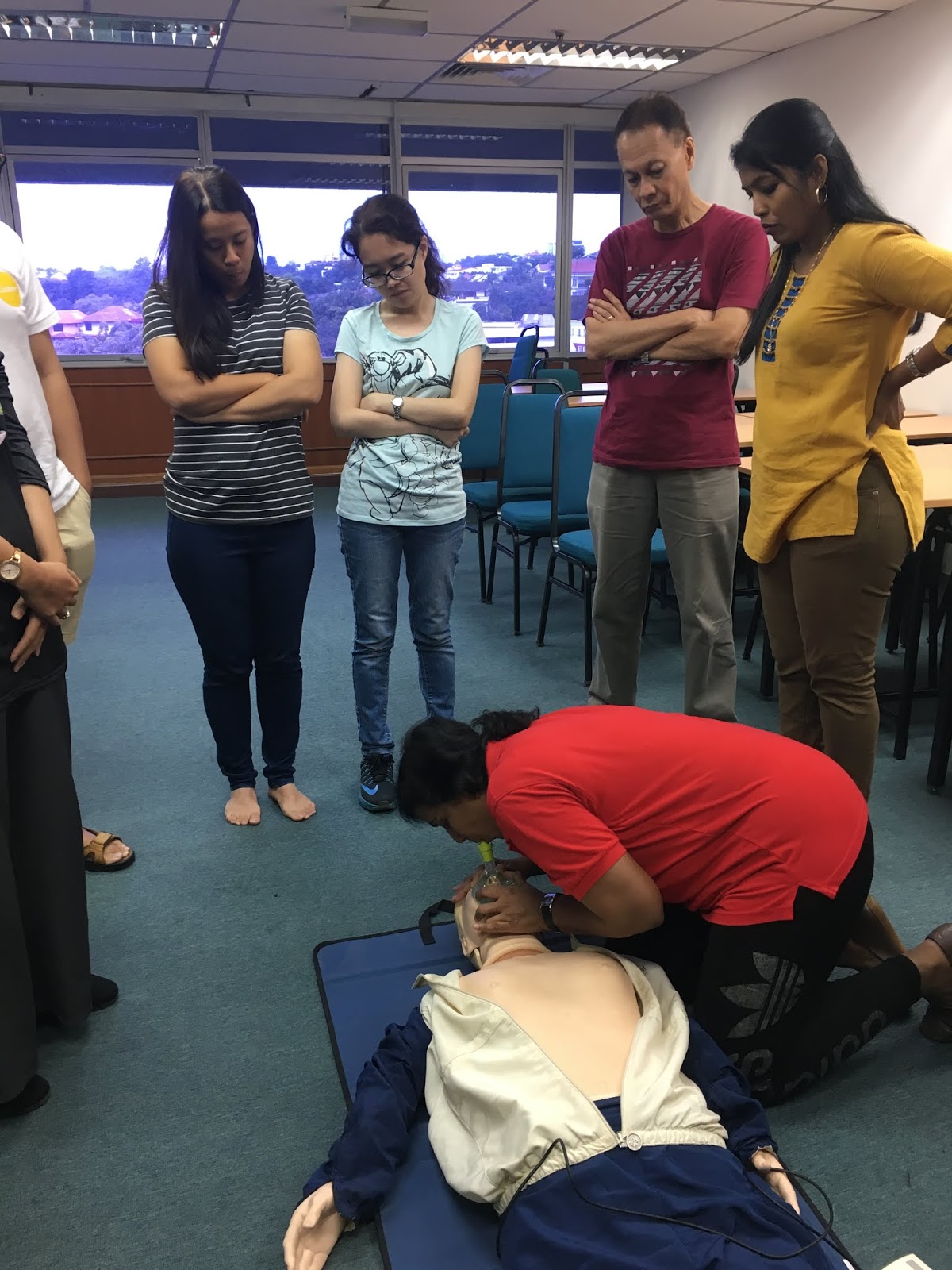

Members learning First Aid and CPR

We welcome all registered and licensed private counselors to join our squad. We welcome volunteers who are creative in raising funds for our cause. We welcome financial support and funding from individuals and corporations who share our vision for making mental health affordable to everyone. 

For further details, do contact our President Ms Johana Dato' Johari at 018-9136688 or email at johana.myconfidential@gmail.com

Join us in our noble humanitarian mission and may we all be blessed with purposeful lives. Ameen.

Monday, February 25, 2019

Why us?


Why choose MY Confidential for counseling? Because we assure affordable fees by keeping our monthly overheads to a bare minimum while providing an environment that is not only emotionally safe for clients to open up but also that our location is in a safe neighbourhood. We abide by the fee structure gazetted by law and there are no hidden charges. See below.


We don’t believe in paying more than half a million ringgit for billboard advertising. We keep it simple. We keep it affordable. We keep it practical. Because human lives take priority over money. That’s us. That’s MY Confidential. 
Contact us to see if you are eligible for minimum fee counseling. 

Counseling Hotline: 018-9136688
Counseling Clinic: 03-74944101

Wednesday, January 9, 2019

Opening Soon: A New Clinic!


We are excited to announce the upcoming opening of our clinic in Taman Tun Dr. Ismail, Kuala Lumpur. Therefore, we will only resume sessions with clients by early February. Keep your eyes on this site for more updates.


Friday, May 29, 2015

The Best Apology - How To Say Sorry Like You Mean It

Forgiveness is an essential part of a growing relationship. Without a consistent practice of forgiveness, relationships are repressed. Forgiveness is not something that comes naturally to most of us, certainly not to me, but it can be learned.

Forgiveness Doesn’t Always Involve Reconciliation

Forgiveness doesn’t always involve reconciliation. The sad reality is that sometimes forgiveness may need to happen for the offended party to move on and begin to heal, but restoring a relationship with the offender would actually be an unhealthy and unwise thing to do. For instance, I do not have a relationship with the man who sexually abused me as a child. For my own sake, I do work on forgiveness over that situation regularly. I don’t need to have contact with him or work through anything with him. He is an unsafe person and pursuing any kind of reconciliation would be toxic to my life. I share that extreme example because forgiveness is such a tough and confusing topic for those of us who have experienced this kind of deep betrayal.
For now, as we talk about forgiveness, let’s agree that we are talking about forgiveness in the context of relationships we value and want to continue, like our marriages. If we want our marriages to last, forgiveness must be learned and practiced over and over again.

Apologize. Forgive. Repeat.

The act of forgiveness is just one side of the equation. For Tony and I, there is a regular rhythm of forgiving and apologizing. Sometimes it’s a quick tapping on the snare drum… apologize, forgive, apologize, forgive, apologize, forgive. Sometimes there is a longer wait and a few extra beats in between… Stand off. Eye contact. Apologize. Stew. Avoid. Forgive. The goal is always to get to apologizing and forgiving at some point, even if there are motions that happen in between. It’s our rhythm, it’s not perfect, but we keep working on it.
Last week we focused on the forgiveness side of our rhythm. We shared with you that a relationship cannot last without a consistent practice of forgiveness. A good apology is a pretty essential factor in each of us coming to a point of sincere forgiveness. I used to believe that forgiveness was essential regardless of an apology. In some cases, I still believe it, but I have since learned that if a relationship is going to grow, both are truly necessary.
The Best Apology - How to say sorry like you mean it #staymarriedI can forgive someone who has not apologized, but our relationship will be stunted. Trust has been broken and it’s not going to be repaired without the other person acknowledging I was hurt. So it is in the case of my relationship with the man who abused me. I have and continue to forgive him through counselingand my own healing process, but he has not and will not apologize. Our relationship is absolutely not going to grow. We are completely separated and I am the better for it. Again, an extreme example so that we can get to the relationship we really want to talk about, our marriage relationships, and the way we dowant it to grow.
In our marriages, apologies are just as necessary as forgiveness. An apology is usually the turning point in a fight. It’s the point at which you go from heated anger and growing resentment to consider how to grow past an offense. Sometimes apologies can be weak and actually make the situation worse. But, just like we can learn to be better forgivers, we can also learn to apologize in the way our spouse will best receive it.

What Kind of Apology Do You Need?

Tony and I often talk about understanding each other’s Love Language. Since discovering them, through Gary Chapman’s research and book, we have found them incredibly valuable in relating to and understanding each other. It turns out that Gary Chapman and co-author and researcher Jennifer Thomas have also discovered there are five distinct ways that people express and prefer to receive apologies. They go into great detail and wonderful examples in their book When Sorry Isn’t Enough, so it’s definitely worth the read. In the mean time, take a look at this list and consider which of these types of apologies you are most likely to make and which you prefer to hear from someone who hurts you…

The Five Languages of Apology

Expressing Regret
Accepting Responsibility
Making Restitution
Genuinely Repenting
Requesting Forgiveness
If you’d like to discover your personal Apology Language Profile, you can take their free assessment here. It takes about 15 minutes, so give yourself some time, preferably when you are relaxed and try not to rush through it. Hint: You can click the Start button even if you don’t enter your name and email if you’d like to get started right away.
We believe that all five are so important, so we have our own way of thinking about apologizing that, as it turns out, incorporates them all. It’s a short list of dos and don’ts that we’ve named “The Best Apology.” Now, if you’re like me, you won’t find yourself wrong very often… or you won’t realize that you were wrong very often… so you might want to Pin this image so you can refer back to it on the rare occasion that you do need to apologize.

Talk these through with your spouse. Take a look at each point and decide together how you would feel if your partner apologized to you using these dos and don’ts. Take some time to take the Apology Language Profile and share your results with one another. It could be that the apologies you’ve been making haven’t been received because they are in the wrong apology language. Arguing and fighting are natural and necessary parts of marriage and we aren’t going to always be able to avoid them. So, it’s essential that we get really good at apologizing, forgiving, and committing to #staymarried.

Original Source: http://staymarriedblog.com/the-best-apology-how-to-say-sorry-like-you-mean-it/

Sunday, April 5, 2015

6 Steps to Help Heal Your Inner Child


According to John Bradshaw, author of Home Coming: Reclaiming and Championing Your Inner Child,the process of healing your wounded inner child is one of grief, and it involves these six steps (paraphrased from Bradshaw):

1. Trust

For your wounded inner child to come out of hiding, he must be able to trust that you will be there for him. Your inner child also needs a supportive, non-shaming ally to validate his abandonment, neglect, abuse, and enmeshment. Those are the first essential elements in original pain work.

2. Validation

If you’re still inclined to minimize and/or rationalize the ways in which you were shamed, ignored, or used to nurture your parents, you need now to accept the fact that these things truly wounded your soul. Your parents weren’t bad, they were just wounded kids themselves.

3. Shock & Anger

If this is all shocking to you, that’s great, because shock is the beginning of grief.
It’s okay to be angry, even if what was done to you was unintentional. In fact, you have to be angry if you want to heal your wounded inner child. I don’t mean you need to scream and holler (although you might). It’s just okay to be mad about a dirty deal.
I know [my parents] did the best that two wounded adult children could do. But I’m also aware that I was deeply wounded spiritually and that it’s had life-damaging consequences for me. What that means is that I hold us all responsible to stop what we’re doing to ourselves and to others. I will not tolerate the outright dysfunction and abuse that dominated my family system.

4. Sadness

After anger comes hurt and sadness. If we were victimized, we must grieve that betrayal. We must also grieve what might’ve been–our dreams and aspirations. We must grieve our unfulfilled developmental needs.

5. Remorse

When we grieve for someone who’s died, remorse is sometimes more relevant; for instance, perhaps we wish we’d spent more time with the deceased person. But in grieving childhood abandonment, you must help your wounded inner child see that there was nothing he could’ve done differently. His pain is about what happened to him; it’s about him

6. Loneliness

The deepest core feelings of grief are toxic shame and loneliness. We were shamed by [our parents] abandoning us. We feel we are bad, as if we’re contaminated, and that shame leads to loneliness. Since our inner child feels flawed and defective, he has to cover up his true self with his adapted, false self. He then comes to identify himself by his false self. His true self remains alone and isolated.
Staying with this last layer of painful feelings is the hardest part of the grief process. “The only way out is through,” we say in therapy. It’s hard to stay at that level of shame and loneliness; but as we embrace these feelings, we come out the other side. We encounter the self that’s been in hiding. You see, because we hid it from others, we hid it from ourselves. In embracing our shame and loneliness, we begin to touch our truest self.

Associate Editor
Source: http://psychcentral.com/blog/archives/2012/09/23/6-steps-to-help-heal-your-inner-child/

Tuesday, March 3, 2015

Choosing to Love Myself

"The 1998 book, Choice Theory: A New Psychology of Personal Freedom, is the primary text for all that is taught by The William Glasser Institute. Choice theory states that:

  • all we do is behave,
  • that almost all behavior is chosen, and
  • that we are driven by our genes to satisfy five basic needs: survival, love and belonging, power, freedom and fun.

In practice, the most important need is love and belonging, as closeness and connectedness with the people we care about is a requisite for satisfying all of the needs."


Today, I've decided to focus on our need for love. We all need to love  and feel closely connected with those who are important to us and be loved by them in return. But lets ponder upon something: how many of us actually include ourselves as someone of equal importance in our own lives? How many of us include ourselves in our Quality Worlds? How many of us feel connected to our own inner selves?

The past few months have been emotionally challenging to me, to say the least. I found myself feeling unappreciated and invisible to those whom I considered worthy to exist in my Quality World. I felt disappointed when they didn't reciprocate the things I had gone out of my way to do in order for them feel happy and loved. And it was truly difficult for me to shift my perspective and look at what happened from other angles. I couldn't figure out why I kept allowing them to disappoint me when they have an excellent track record at letting me down repeatedly. I understand the concept that just because I have them in my Quality World, that does not guarantee that I will be in their's. If such is the case, I should be able to easily communicate my personal boundaries to them and tell them that what they were doing to me is not okay. I was able to do that with most of those in my Quality World. But why couldn't I do the same to the few that were hurting me and causing me a lot of emotional stress?

It was during my latest session with my therapist that I experienced a very powerful inner revelation: I loved those who were hurting me more than I love myself! Wow! That was a real huge wrecking ball to break my concrete hard mental blocks!

Think about it for a moment. Why don't we include ourselves in our own Quality Worlds? Why? Is it possible we suffer from self loathing? Is it possible that our inner bullies have judged us unworthy of being loved by others? When someone tells us they love us, how many of us battle the inner cynic that whispers "Yeah, sure!" It is easy for us to believe we are loved by our parents and siblings. But when it comes to others who are not related to us, we counter their expressions of love with disbelief. I seriously think this stems from lack of self love. And this is not healthy. At all. And lets take a look at the Seven Deadly Habits. How easy it is for us to criticize, blame, complain, nag, threaten, punish and bribe (often with junk food or impulsive spending) ourselves.

Imagine practicing the Seven Caring Habits onto ourselves for just a day. We can either choose to apply all Seven Caring Habits onto ourselves in a day (all 7 in 1 day, once a week), or choose one of the Seven Caring Habits onto ourselves for one whole week (1 Caring Habit a day, everyday, for 1 week). In fact, there's a variety of ways you can apply this idea onto yourself. The sky the limit as far as this is concerned!

Imagine how you would feel if you were to practice supporting your inner self all throughout a day; or even a week! Of course, you would still be getting support from people around you. But if you do not feel you are worthy of accepting any external support, no matter how supportive people are around you, you would still end up feeling alone and unsupported. The same goes with the rest of the caring habits such as encouraging, listening, accepting, trusting, respecting yourself and negotiating differences that exist between what lies within you and what you show the world.

Do you view yourself idealistically according to how you see yourself in your Quality World or are you able to accept yourself realistically as who you really are? Are you congruent with yourself? Does your inside match your outside? Are you able to be authentic and sincere with yourself? Chances are, if you feel exhausted and glad to be home within your comfort zone after a social outing because it does take a lot out of you to behave a certain way and suppress your true self, it is highly possible that you are afraid to be yourself. That is a sign of lack of self acceptance and lack of self worth.

What I am suggesting is that we practice the Seven Caring Habits onto ourselves FIRST before we even start doing the same onto others. A cliche quote comes to mind. "Charity begins at home." Here's mine: "If you don't love yourself, you don't know what love is."

Thursday, February 26, 2015

Mental Health and Happiness: Latest Video Discussion With Dr Ken Larsen.

Sharing my own personal struggles in maintaining mental health as well as my first hand experiences in an effective application of Choice Theory in my daily life. Click the link below to watch the video.

http://mentalhealthandhappiness.com/profiles_johana-johari/